The Green Adventure Expanded to the Mountains – The Birth of the Grade VII Collection
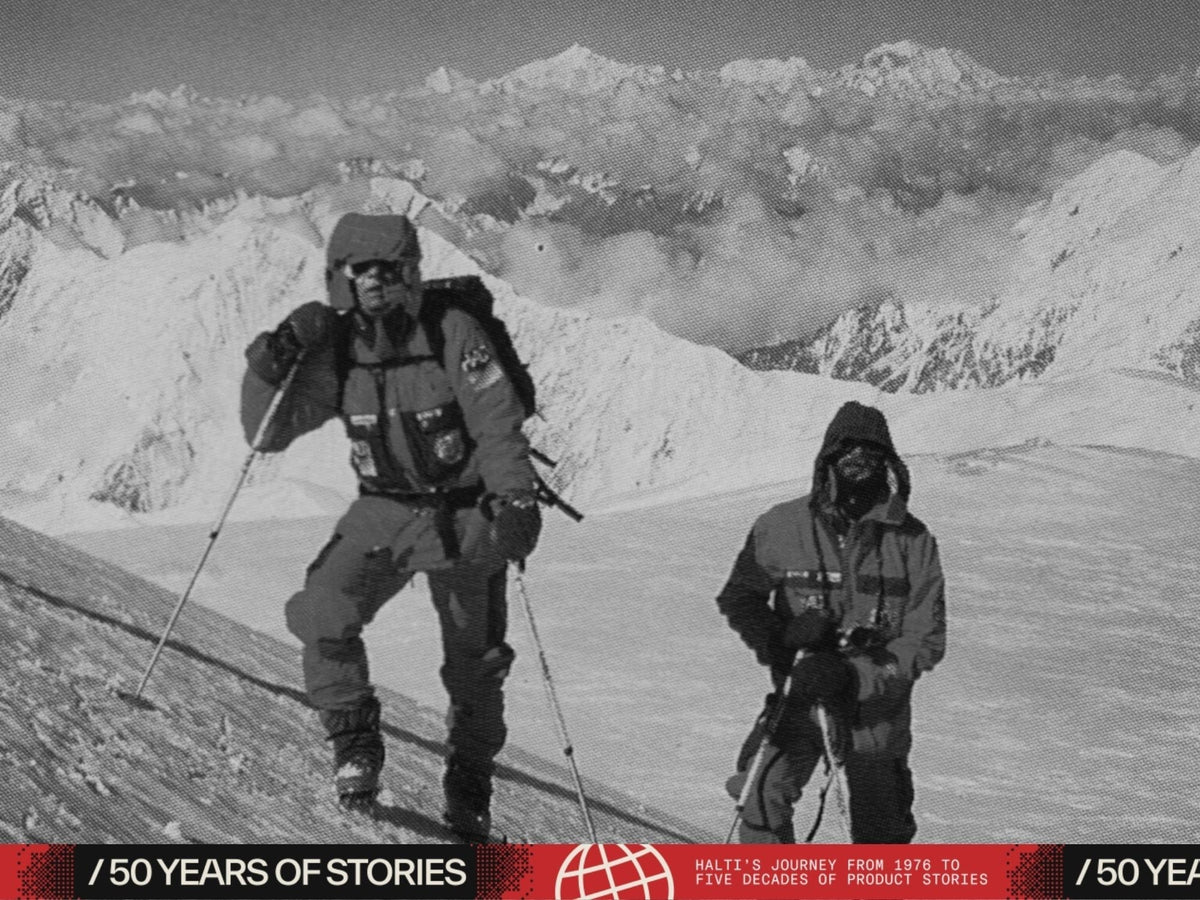
In the early 1990s, Halti products were recognized by the yellow autumn leaf logo. Halti was a hiking brand for the whole nation, with products familiar to outdoorsmen, scouts, and hunters alike. The selection included backpacks, tents, sleeping bags, sleeping pads, and clothing. Their proprietary waterproof DrymaxX material had already been launched, and technical outdoor clothing was manufactured to meet the needs of domestic hikers. The clothing collection was divided into City Outdoor products designed for urban use, and more technical Pro Outdoor products that allowed for "free mobility."
New Demands from the Mountains
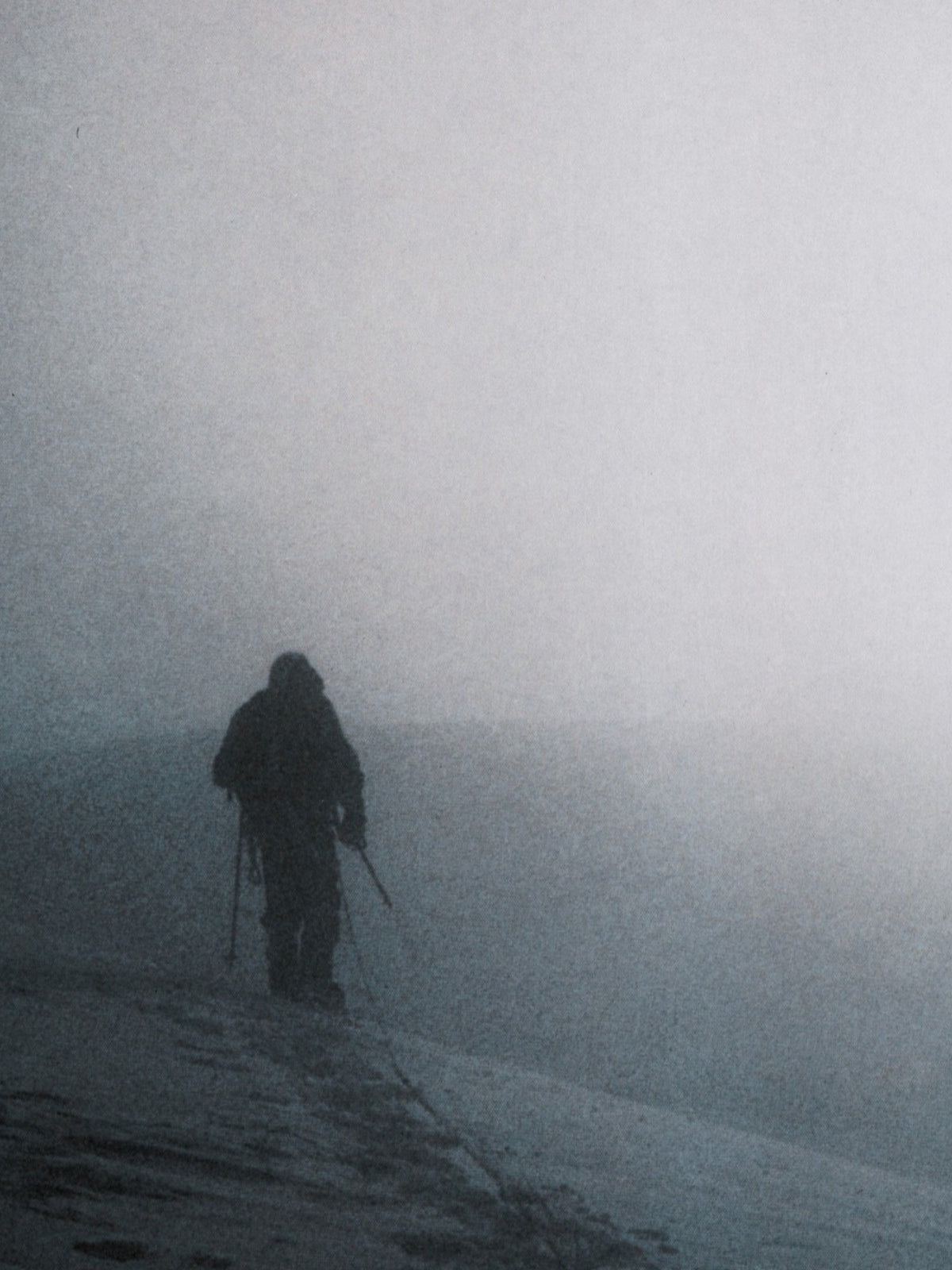
In 1996, a young Mikko Routala marched into the Halti office with his carabiners clinking. The ski instructor, who had traveled to many corners of the world for his age, taught winters at Ylläs but had spent his summers chasing snow in New Zealand, where the spark for climbing had also been ignited.
A roommate studying to become a mountain guide practiced climbing on holds bolted to the wall of a local sports store. Routala had never seen anything like it, so he had to try it out. Upon returning to Finland, he sought out the local climbing community, and the sport quickly became his new passion.
Routala grew up in the same city as Halti's then-CEO, Risto Salo. Salon Urheilupyörä, a shop run by Risto's father Yrjö in the center of Rovaniemi, was a Halti customer and a familiar place to Mikko. When new adventures required new gear, it was natural to knock on Halti's door.
From Hiidenkirnut to Bolivia
Routala studied geography and Spanish at the University of Helsinki. His climbing buddy, Jani Lunnas, was studying the same subjects. Once, while climbing at the Hiidenkirnut in Rovaniemi, an idea was born: they should go "climb in Spanish." What if they traveled somewhere where they could actually use their language skills?
South America was chosen as the destination, and in the summer of 1996, the boys set off for a month in Peru and Bolivia—equipped with Halti gear. The trip was featured on MTV3's Monomeno program, which turned into a multi-year project for Routala.
Monomeno was originally a magazine-style program focused on skiing, but when the network wanted to produce the show during the summer season as well, skiing was joined by hiking, mountain biking, rock climbing, and other outdoor sports. Quick-witted and versatile in various sports, Routala was a perfect fit to host. Together with Kikka Pohjaväre, he took viewers into Finnish nature as well as out into the world.
The program also played an important role in continuing the collaboration between Halti and Routala. For Routala, it offered a way to execute adventures that required sponsorships. For Halti, it brought national visibility and took their products into new environments alongside new types of users.
"Many interests met there, and honestly, thanks to that, we were able to go on those trips in the first place."
The adventures didn't stay just on television. The trips also resulted in articles for the Helsingin Sanomat newspaper and the skiing magazine Skimbaaja.
When Details Matter
Through these expeditions, Halti products ended up in situations and conditions where their functionality was no longer just a marketing promise or a concept on a drawing board. The gear had to perform, and even the smallest detail could make a huge difference.
Routala remembers a pair of pants from the Bolivia trip that ripped while climbing when the front point of his left crampon caught his right pant leg. Of course, those pants had never been designed to be used with crampons.
From another trip, a stiff-soled shoe that was otherwise perfectly suited for its purpose stuck in his mind—the top lace loops featured metal hooks. On the climbing wall, the hooks rubbed against the rock and flattened out, after which the shoe could no longer be properly tightened.
Small things, but crucial on the mountain.
Observations were noted down and reviewed with Halti after the trips. For example, they started reinforcing the inner ankles of pant legs with Kevlar so they could better withstand crampon spikes, ski edges, and other heavy wear.
The product manager also brought the designers and other people practically working with the gear into these feedback meetings.
"The feedback discussions after the trips were really fruitful. We got to say directly and concretely what worked, what didn't—and why. It was really rewarding for us, too, to see that our feedback was actually being used to develop the clothing."
That feedback manifested in the products as new features and materials. At the same time, climbers became a brand new target demographic for Halti.
More Durable, Lighter Products
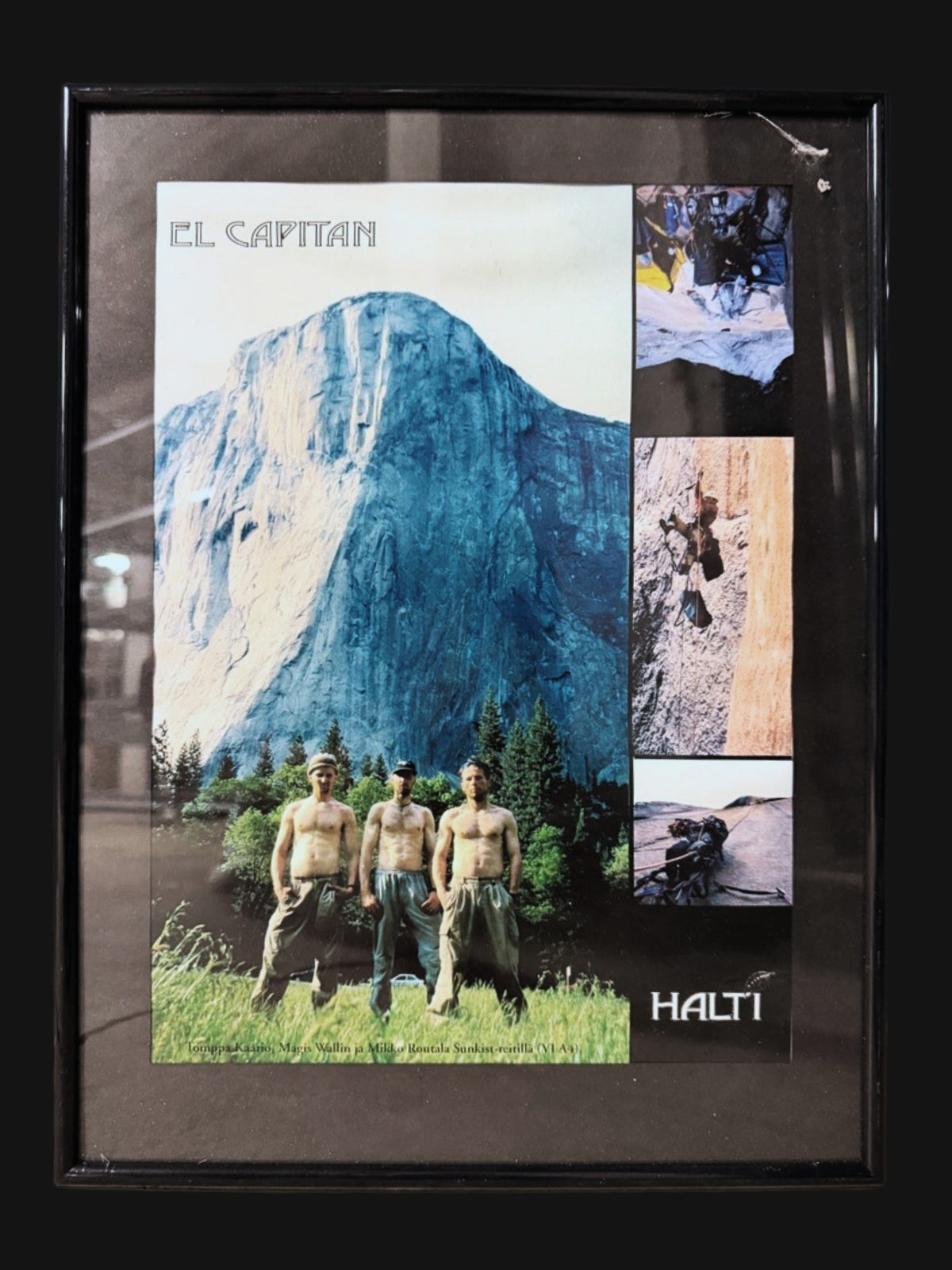
Between 1997 and 1999, Routala and his team traveled three times to Yosemite in California, one of the world's most famous big wall climbing destinations. The various adventure lineups included climbers like Marko "Magis" Wallin and Tuomas Kaario.
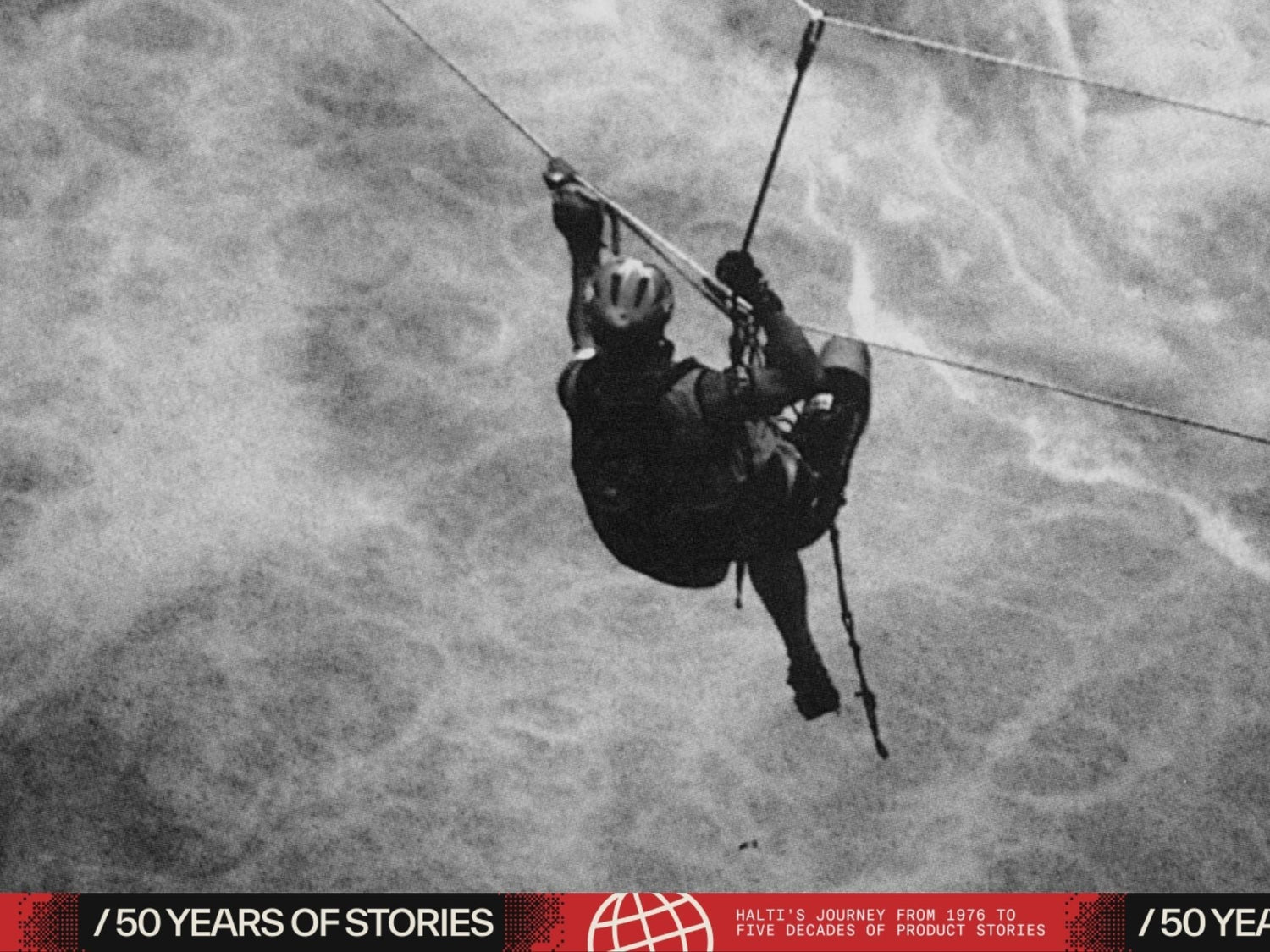
Yosemite was the mecca of international climbing culture. Its symbol, El Capitan—an almost kilometer-high vertical granite wall—was one of the legendary stages for big wall climbing. An ascent could take days, meaning climbers had to haul food, water, and gear up the wall, sleeping on a hanging portaledge platform.
In such conditions, even more was demanded of the equipment. It had to withstand extreme wear and tear, protect against the weather, and simultaneously be as lightweight and unrestrictive as possible.
Routala and the other climbers set the bar high for the products.
"Halti had previously been geared towards Finnish forests and outdoor recreation. And then we came in clinking with all sorts of gizmos and gear, acting like extreme dudes."
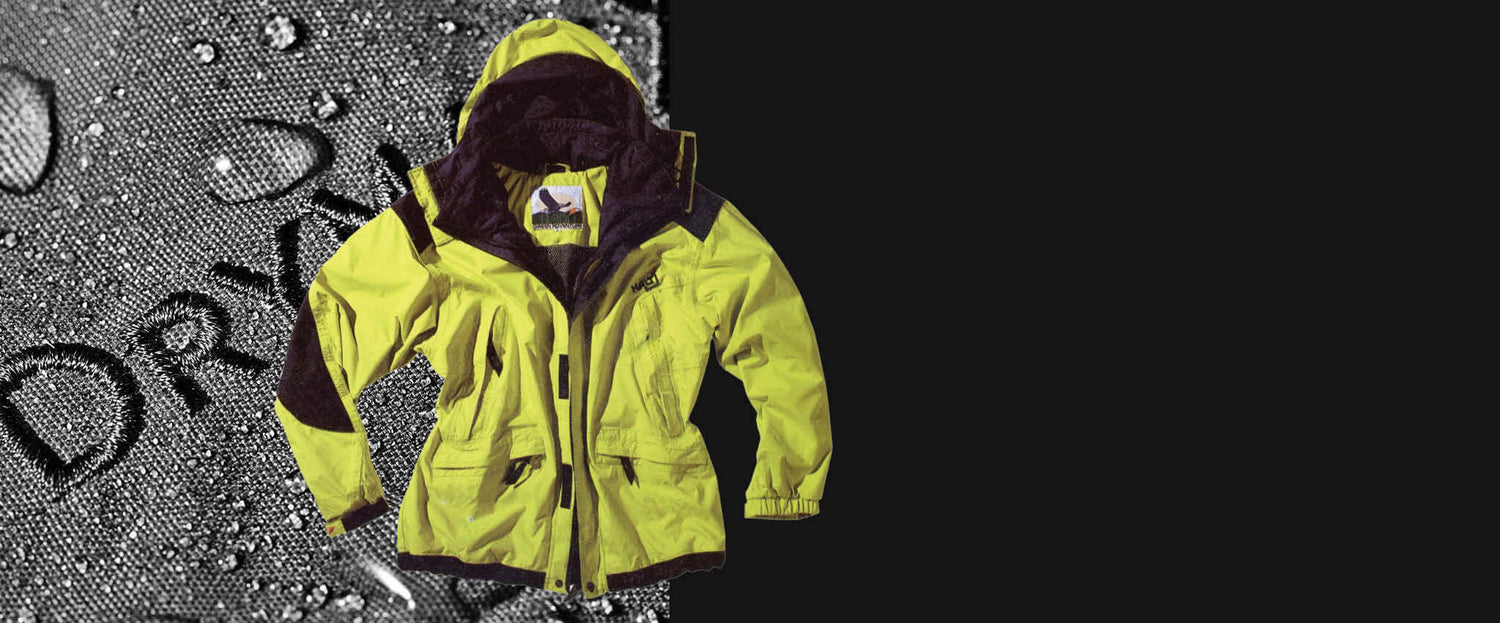
New types of users brought new types of demands. Around the same time, Halti was also collaborating with adventure racers and other extreme sports athletes. Enthusiasts of different sports looked at the products from slightly different perspectives, but according to Routala, the direction of development was mutual: everyone wanted the products to be more durable, lighter, more breathable, and more practical.
Grade VII is Born from the Climbers' World
One of the people who made a valuable contribution to product development was climber and adventurer Pata Degerman, who at the time was planning an expedition to Greenland to climb a massive, previously unclimbed wall.
Routala remembers a joint product development meeting at Halti where the conversation turned to the Grade classification used in technical climbing and its most demanding tier. According to Routala's recollection, Degerman threw out the idea of naming the products with the suffix "Grade VII". It perfectly captured the extremity demanded of the upcoming expedition and its gear.
The name stuck.
The first Grade VII products saw real action with Degerman in Greenland. Routala, on the other hand, remembers testing the first prototypes on Stora Blåmannen near Tromsø, Norway.
The Sharpest Edge of the Technical Collection
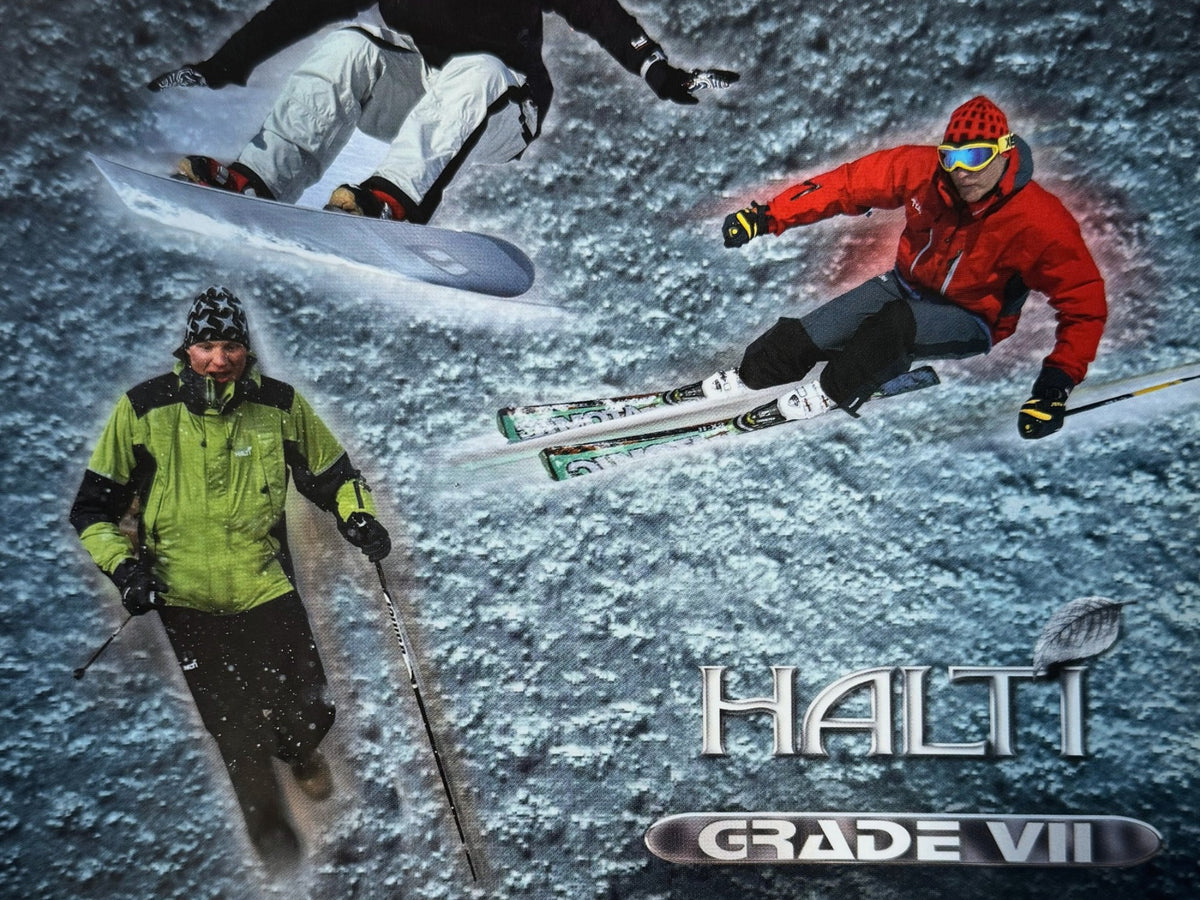
Grade VII became the absolute technical peak of Halti's outdoor collection. The label highlighted products where technicality and performance had been pushed to the limit.
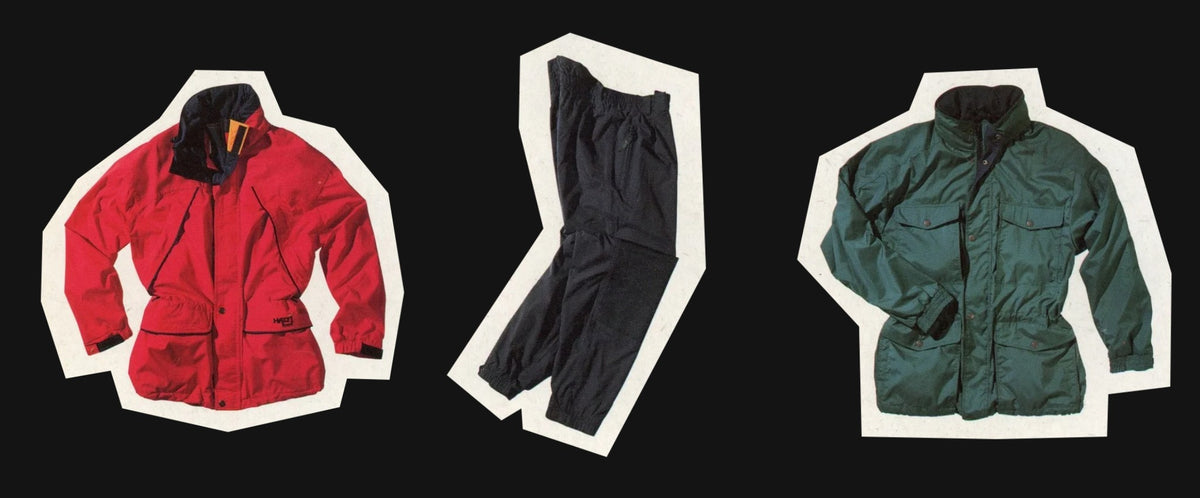
The lineup included a three-layer technical shell jacket, a lighter shell jacket, and pants designed for heavy-duty use. The experiences gathered from climbers were evident in the product details. Pant legs were reinforced to withstand crampon strikes. The jackets featured protective hoods designed to fit over climbing helmets, and freedom of movement was enhanced with the Angel Wings sleeve cut. Pockets were raised higher so they could be easily accessed even while wearing a climbing harness.
The Grade VII name was also a subtle inside nod. Its meaning resonated most with those who knew the world of big wall climbing. On the lips of Halti's sales team, the name soon took on the more familiar, phonetic Finnish form: "gradevii".
However, the significance of the project was bigger than its name. It communicated the way the products were developed. Climbers and other people navigating demanding conditions weren't just product testers or marketing faces; they were integral to the product development itself.
They brought back more than just photos and stories from the mountains.
From Fearlessness to Avalanche Pastor
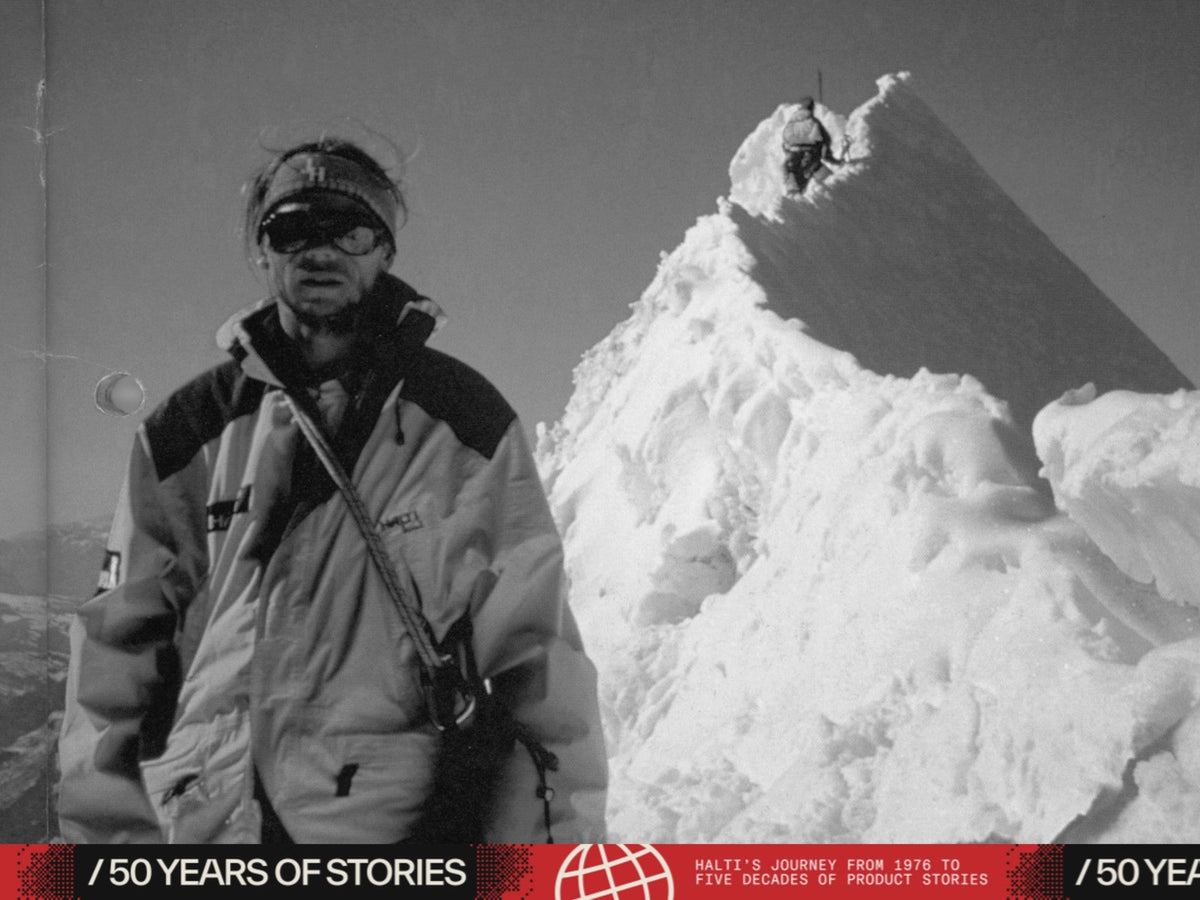
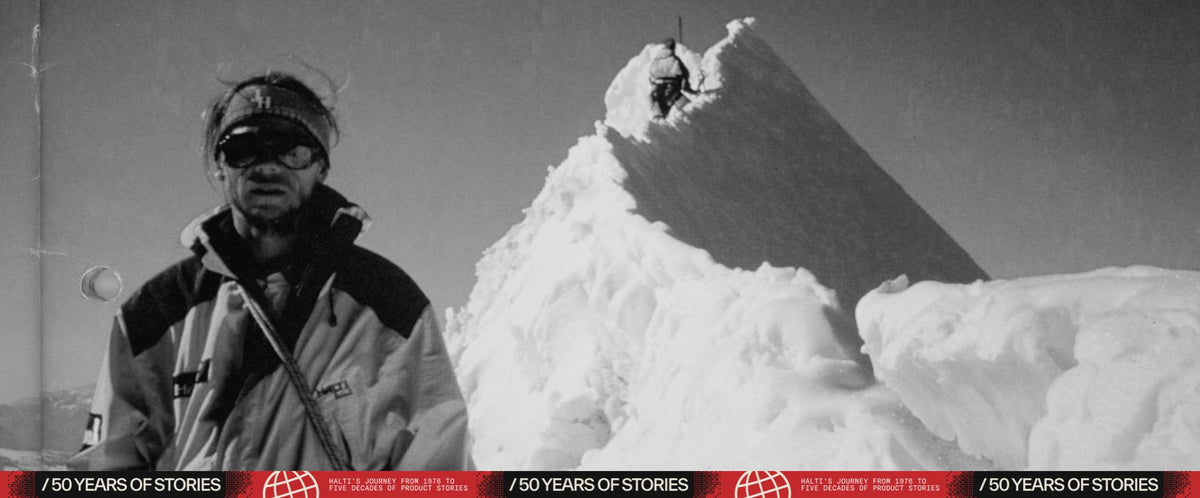
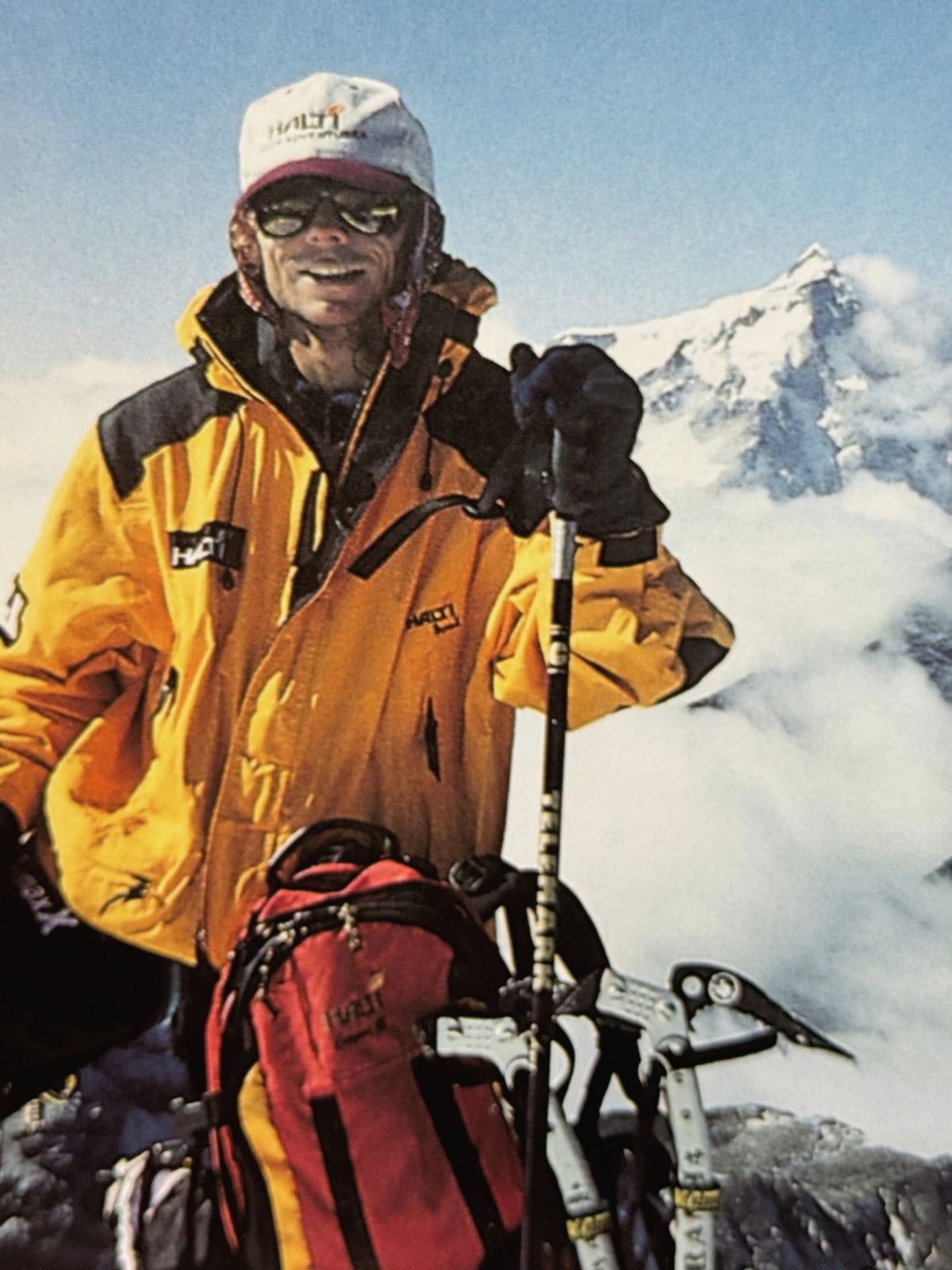
In thirty years, both the gear and Routala's own attitude towards the mountains have changed. In photos from the 1990s, the young climber looks fearless.
"I wasn't afraid of anything. I was downright foolhardy."
In Yosemite, Routala once found himself in a situation that still makes him shudder. He was rappelling down El Capitan at a height of about 200 meters, aiming for the next anchor off to the side, when he noticed he had only about a meter of rope left. There was no stopper knot at the end of the rope. If the rope had run out mid-rappel, it would have resulted in a fatal fall.
"In the end, fear is a pretty healthy thing. It helps keep you alive."
Nevertheless, Routala is proud of what he got to do in his youth. The experiences were unique, and he doesn't regret them, but with his current knowledge, he would do many things differently, or at least more safely.
Today, Routala fly-fishes, hikes, and rides a gravel bike, and still frequents the mountains, but without taking massive risks. He specializes in avalanche safety, studies snow science, and trains others to move more safely in the backcountry. The nickname 'avalanche pastor' (vyörypastori), coined by Jussi Ovaskainen, describes the modern Routala perfectly.
"I feel that with this work, I'm paying the universe back a little bit for surviving all those situations myself. If I can use my own experiences to help someone move more safely in the mountains, it matters."
FACT: What does Grade VII mean in climbing?
In the American NCCS (National Climbing Classification System), the Grade, or Commitment Grade, describes the time and commitment required for the entire climbing route—not the technical difficulty of individual climbing moves.
At the most demanding end of the scale, Grade V typically requires an overnight stay on the route, and Grade VI requires at least two days of demanding technical climbing. Grade VII signifies extremely committing big wall ascents on remote mountains.
The NCCS classification is still in use, although it is applied less frequently today. With the evolution of climbing and gear, routes that used to take days can now be climbed significantly faster, which is why a time-based classification doesn't always reflect the difficulty of a route in the exact same way it used to.