
Reaching the Top in Style – Halti’s Journey to Becoming the Official Outfitter of the National Alpine Ski Team
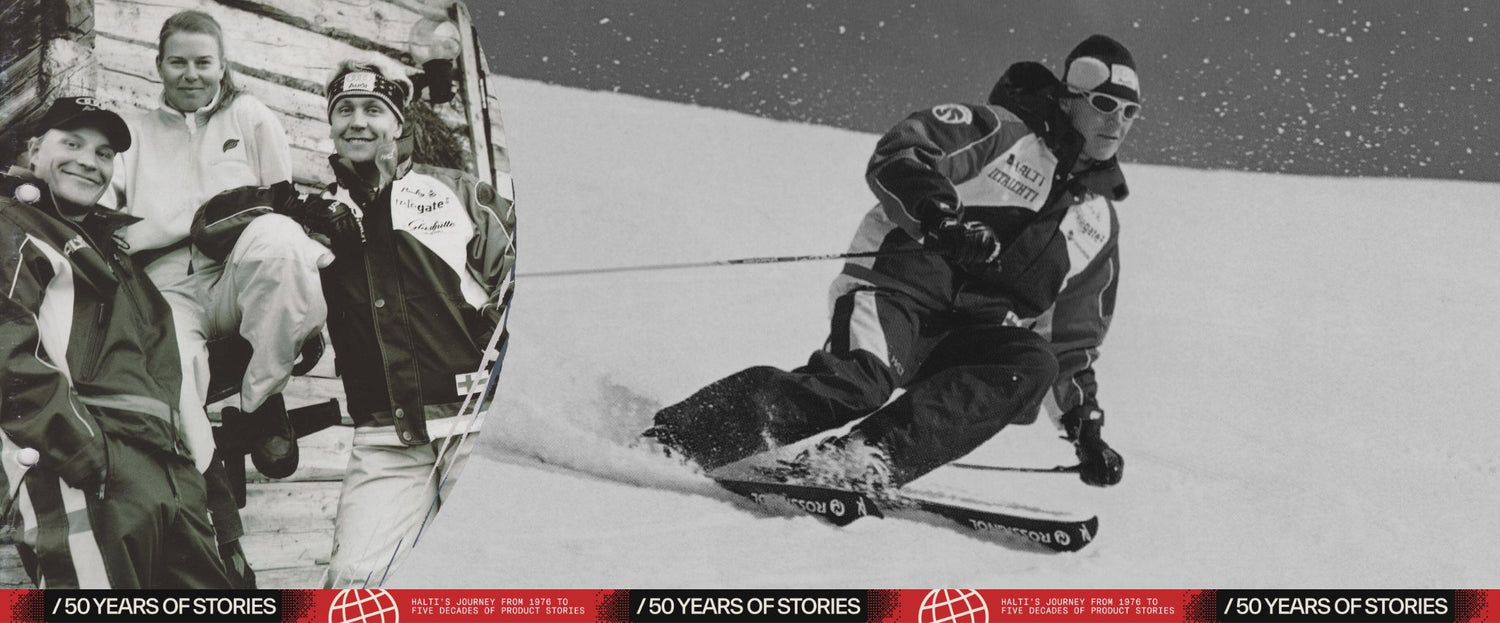
In celebration of our anniversary year, we look back to the turn of the millennium and the moments when Finnish alpine skiing and Halti began their collaboration, taking a decisive step onto the international stage. The partnership with the national alpine ski team brought Halti for the first time into the heart of the “white circus” – a world the brand has now returned to with a new generation of national team athletes.
This is a story of elite sports and Finnish identity, ambition and trust. The story is told through the perspectives of Kalle Palander and Marcus Sandell, whom we interviewed about the significance of the collaboration. Welcome to the 50 Years of Product Stories series, highlighting the moments and insights that have shaped Halti into the brand it is today.
When the Myth Was Broken
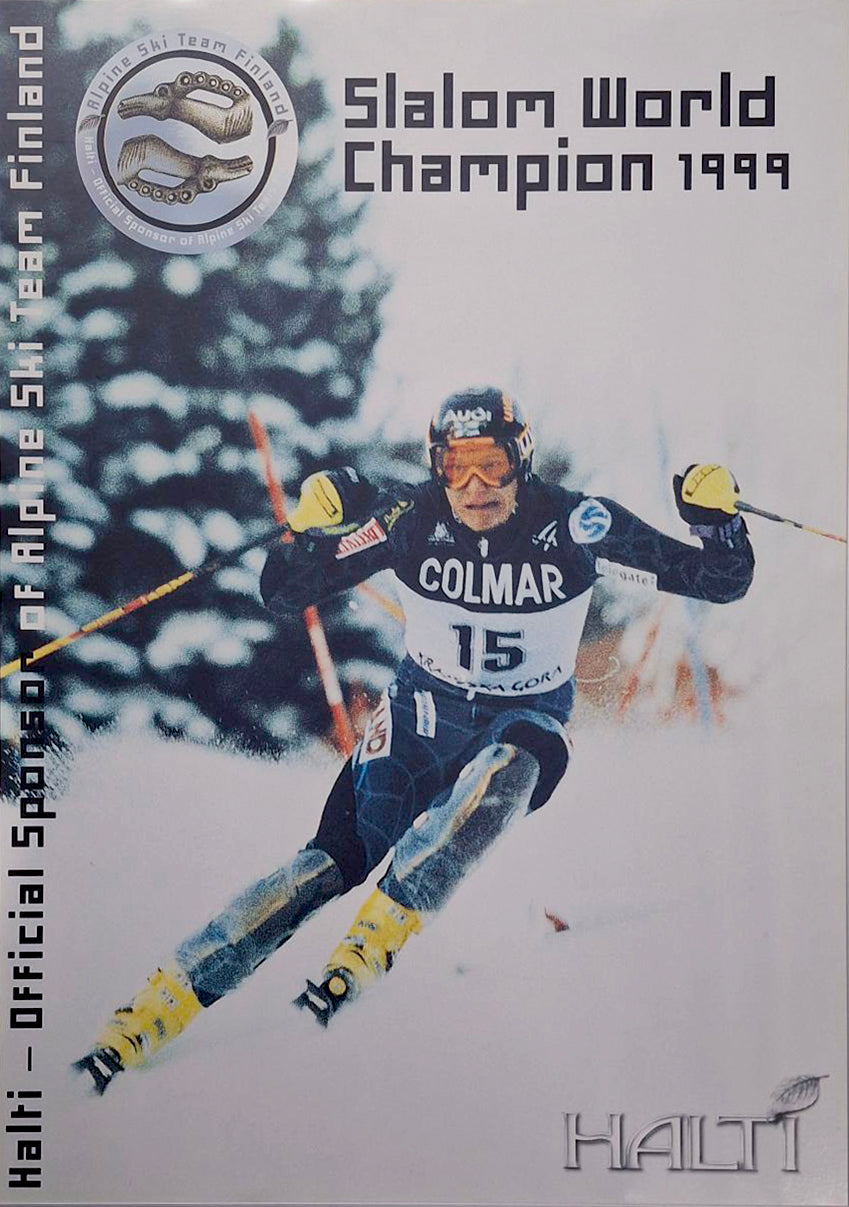
In February 1999, the mountain village of Vail in Colorado was bathed in winter sunshine, and the race slope was filled with tension. The men’s slalom at the Alpine World Championships had reached its निर्ण decisive stage. The pre-race favourites were familiar names: Lasse Kjus, Christian Mayer, Giorgio Rocca, and others. Finland was not on that list.
After a strong first run, Kalle Palander was in seventh place, still well outside the medal positions. In the second run, the situation turned into a true drama. Palander attacked the course with a sharp, aggressive rhythm. His skis bit into the ice, the lines were tight, and the turns razor-sharp. The intermediate times flashed negative, signaling his accelerating pace. With an almost perfect run, Palander took the lead.
But six racers were still to come. At the finish, the alpine skier, satisfied with his performance, watched as competitors who had been faster than him in the first run took their turns. One by one, they failed to beat Palander’s time.
When the final challenger, Lasse Kjus—already crowned the king of speed events at the championships—also finished behind Palander, the truth was undeniable. Finland had its first Alpine World Champion.
Vail 1999 went down in history as the moment when the myth that a Finnish alpine skier could not reach the top was shattered. Alpine skiing moved from the margins into the national spotlight. Small, northern Finland—whose highest mountain, Halti, rises lower than the finish line of Vail’s slalom course—joined the respected ranks of the “alpine nations,” and did so in the most technical discipline of all: slalom.
Halti Enters the “White Circus”
At the same time, at Halti’s headquarters in Juvanmalmi, dreams of international expansion were taking shape. The outdoor brand wanted to broaden its offering beyond clothing and gear to include highly technical performance apparel. Negotiations between the Finnish Ski Association and Halti began, and were concluded in a strong spirit of mutual understanding. Halti became the new apparel and equipment partner of the Finnish national alpine ski team.
Training the staff in the specifics of the sport started from the basics: what distinguishes equipment for technical disciplines from that used in speed events? A designer and a product manager were sent to glacier training camps to hear athletes’ wishes firsthand and to experience alpine skiing up close.
The partnership agreement covered a comprehensive equipment package, from base layers to race suits, leisurewear to footwear and bags. Product teams were given the necessary resources, with no compromises made on materials or effort. The message from management was clear: the athletes’ trust had to be earned.
Only the Best for Champions
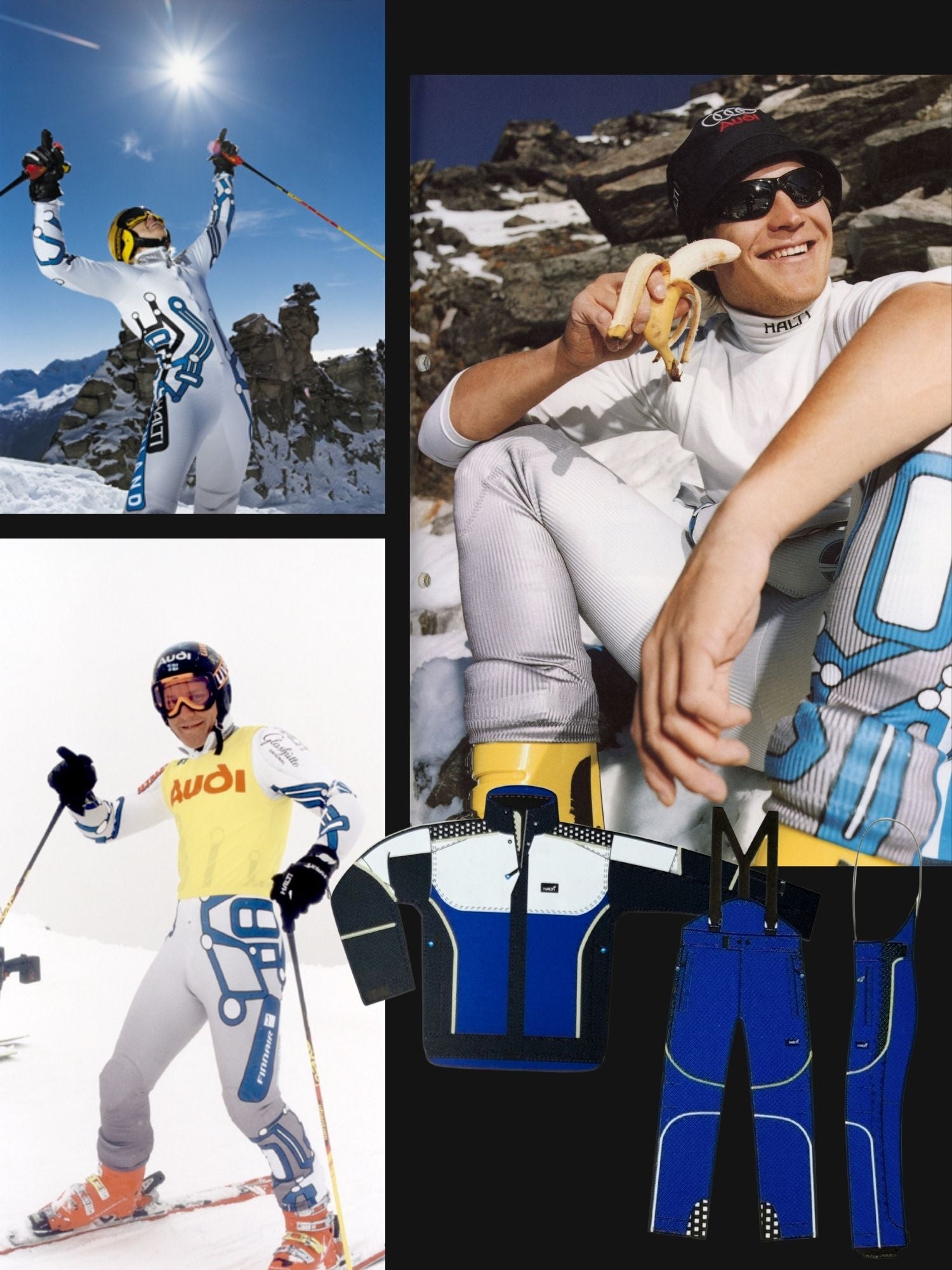
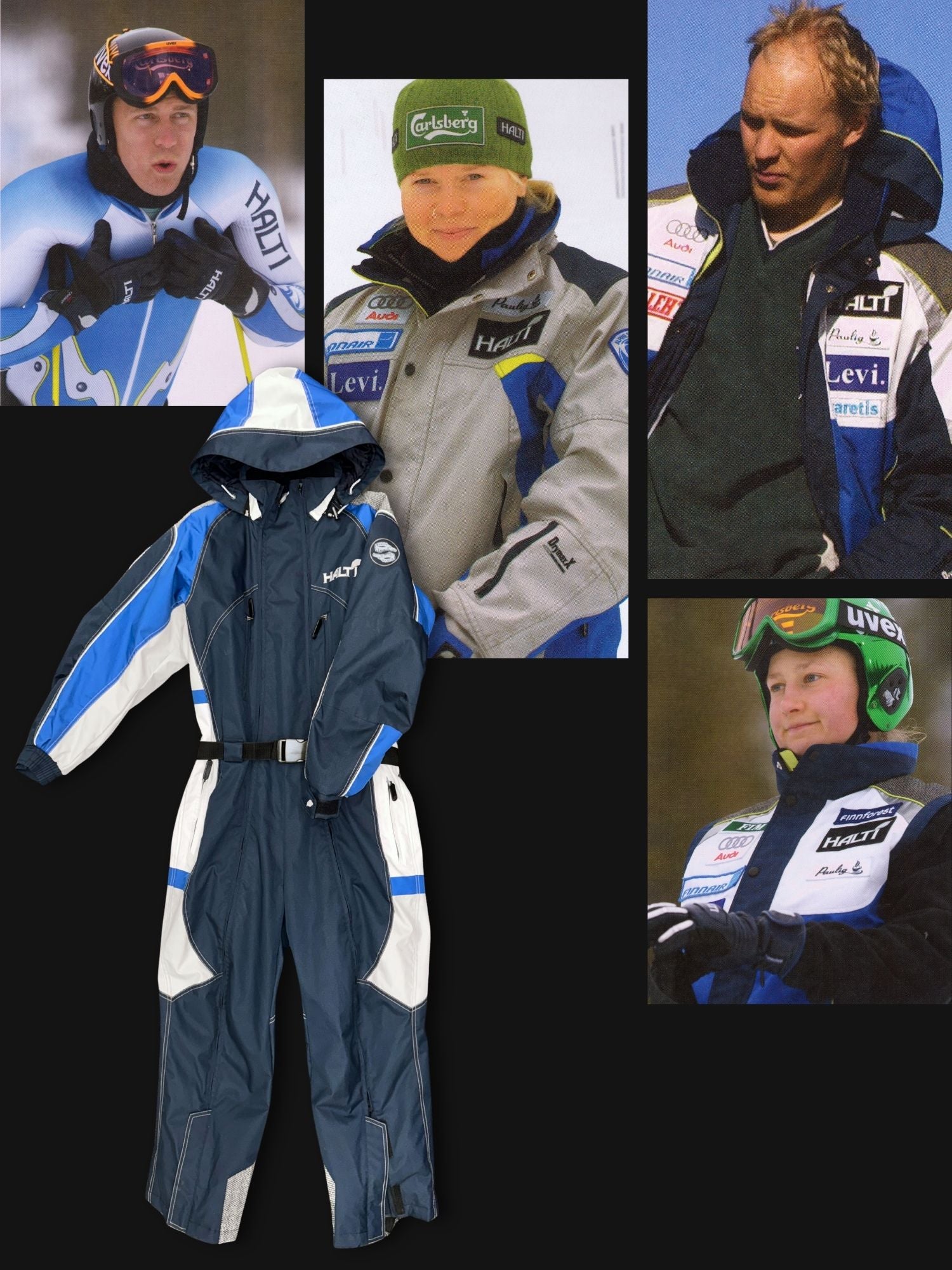
Created in close collaboration with the team, the collection combined performance and quality. The garments were designed by listening carefully to the athletes’ needs and to function in demanding conditions. No compromises were made in the choice of materials or in the cuts. Every detail was designed with the user in mind, without forgetting aesthetics.
The team’s unified look conveyed a sense of belonging and represented Finland with style on international stages. According to designer Kaisa Syväsalmi, a golden antlered reindeer inspired by Sámi mythology was embroidered inside the garments—a symbol of life and the creation of the world. According to northern tradition, this power animal, believed to fly with invisible wings, was thought to strengthen the athletes’ winning mindset.
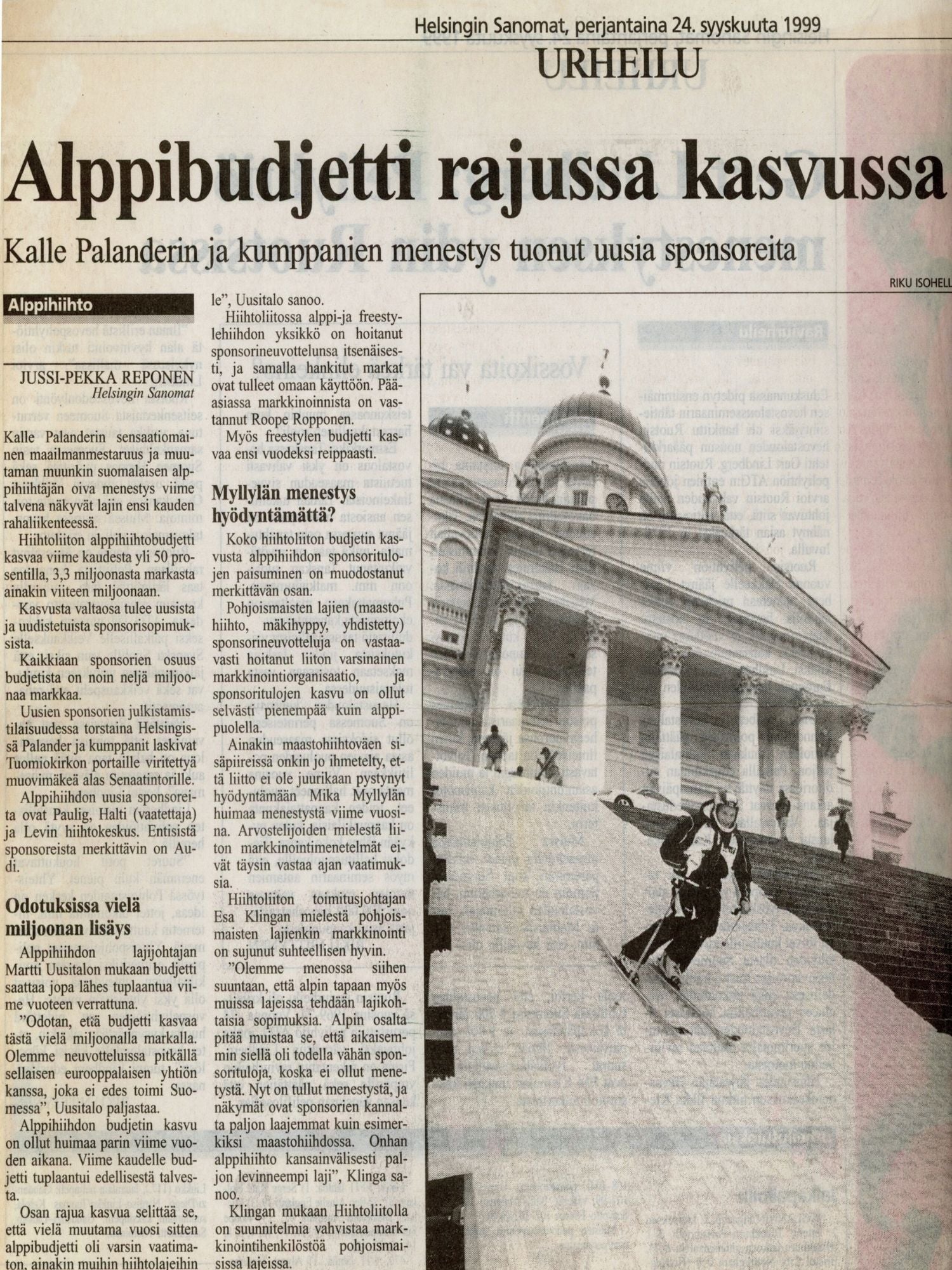
Speed from the Wind Tunnel – Down the Steps of Helsinki Cathedral
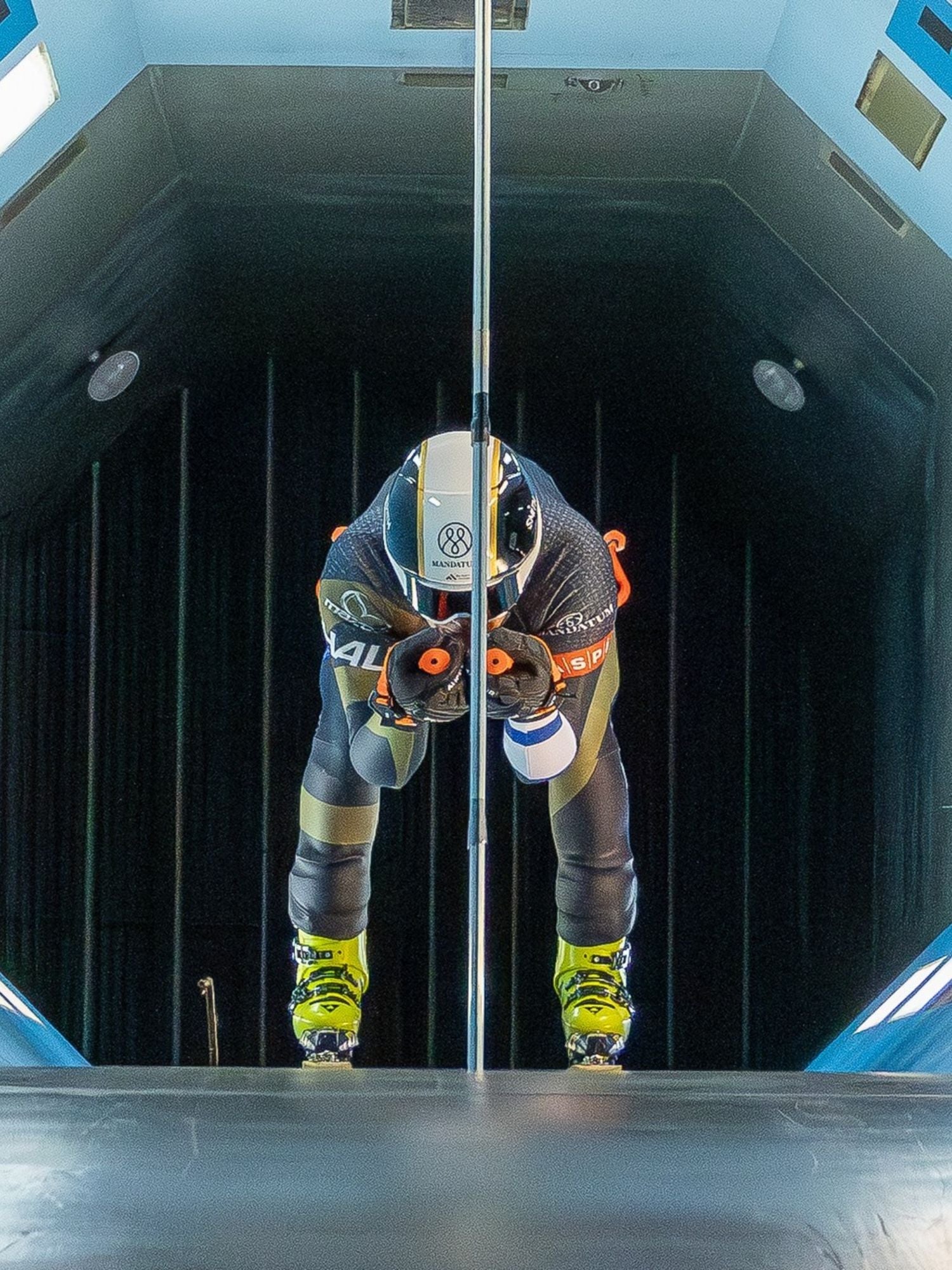
The higher the speed, the greater the air resistance. The aerodynamics of a race suit are an invisible force that often decides outcomes by hundredths of a second. Especially in speed disciplines, it is crucial.
In the early stages of the partnership, race suit materials were tested in the wind tunnel at Otaniemi, at what was then the Helsinki University of Technology. Both Halti and the team approached the design process with exceptional ambition.
At the turn of the millennium, the collaboration was unveiled to the media in spectacular fashion at Senate Square. With special permission, a plastic slope was built on the steps of Helsinki Cathedral, where Palander and other athletes skied down in a demonstration run, celebrating the new partnership between Halti and the national alpine ski team. Behind the bold idea were the visionary discipline manager Martti Uusitalo and his close collaborator Roope Ropponen.
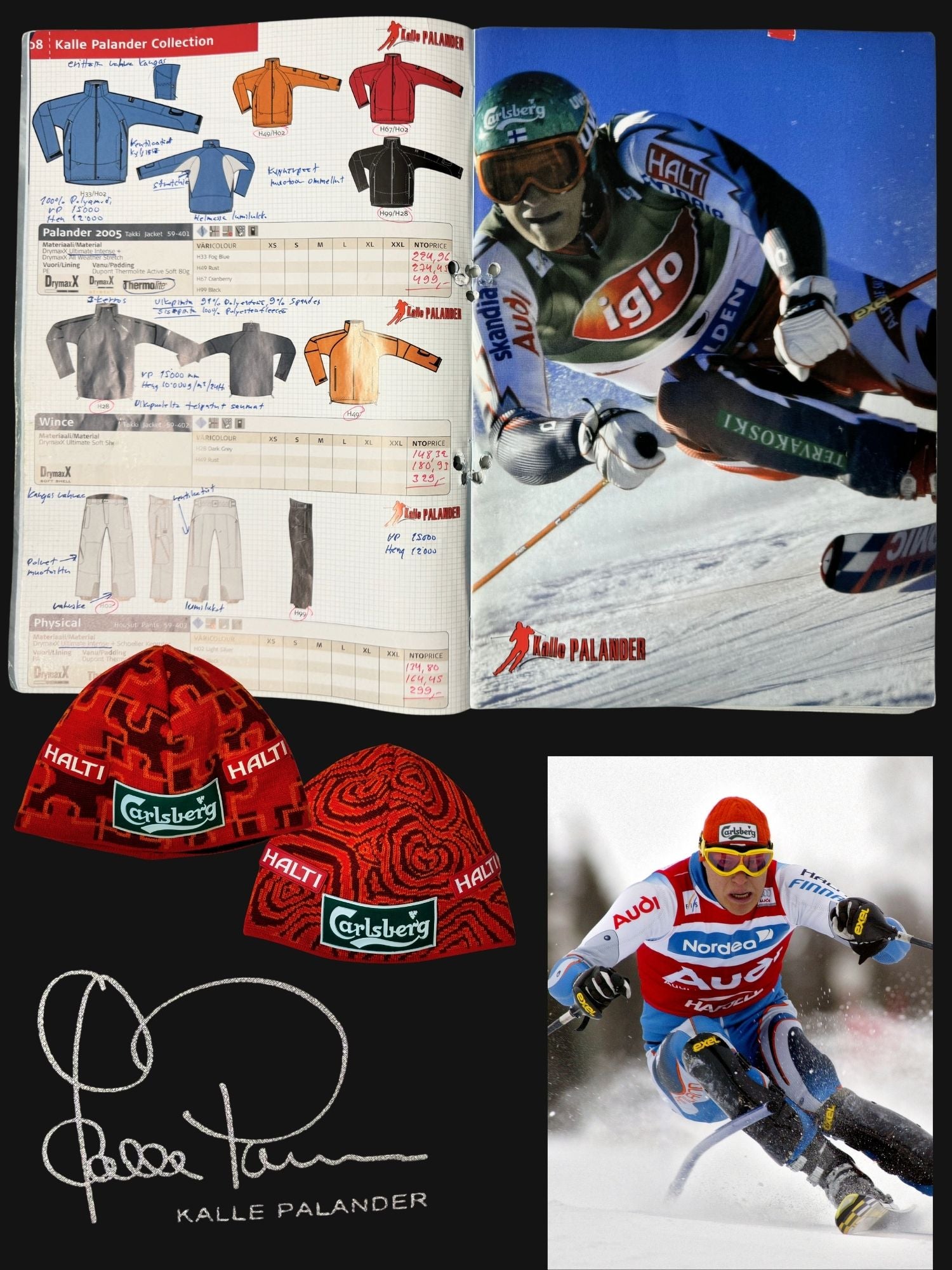
Trust Is Built Through Action
When Kalle Palander, known for his straightforward honesty, first heard that Halti would be the national team’s outfitter, his reaction was skeptical. In the “white circus,” teams were used to major international names like Phenix, Descente, and Colmar. A small Finnish outdoor brand felt like an unusual choice.
The beginning was not easy. There was plenty of fine-tuning to do with race suits and sizing, and it took a couple of years before everything reached a top-level standard. The equipment package was extensive, and every product was refined based on athletes’ feedback. Halti listened closely to the athletes and invested heavily in product development.
It was the details that stood out: black technical socks with the skier’s nickname knitted into the toes. On Palander’s socks, it read “Palle.”
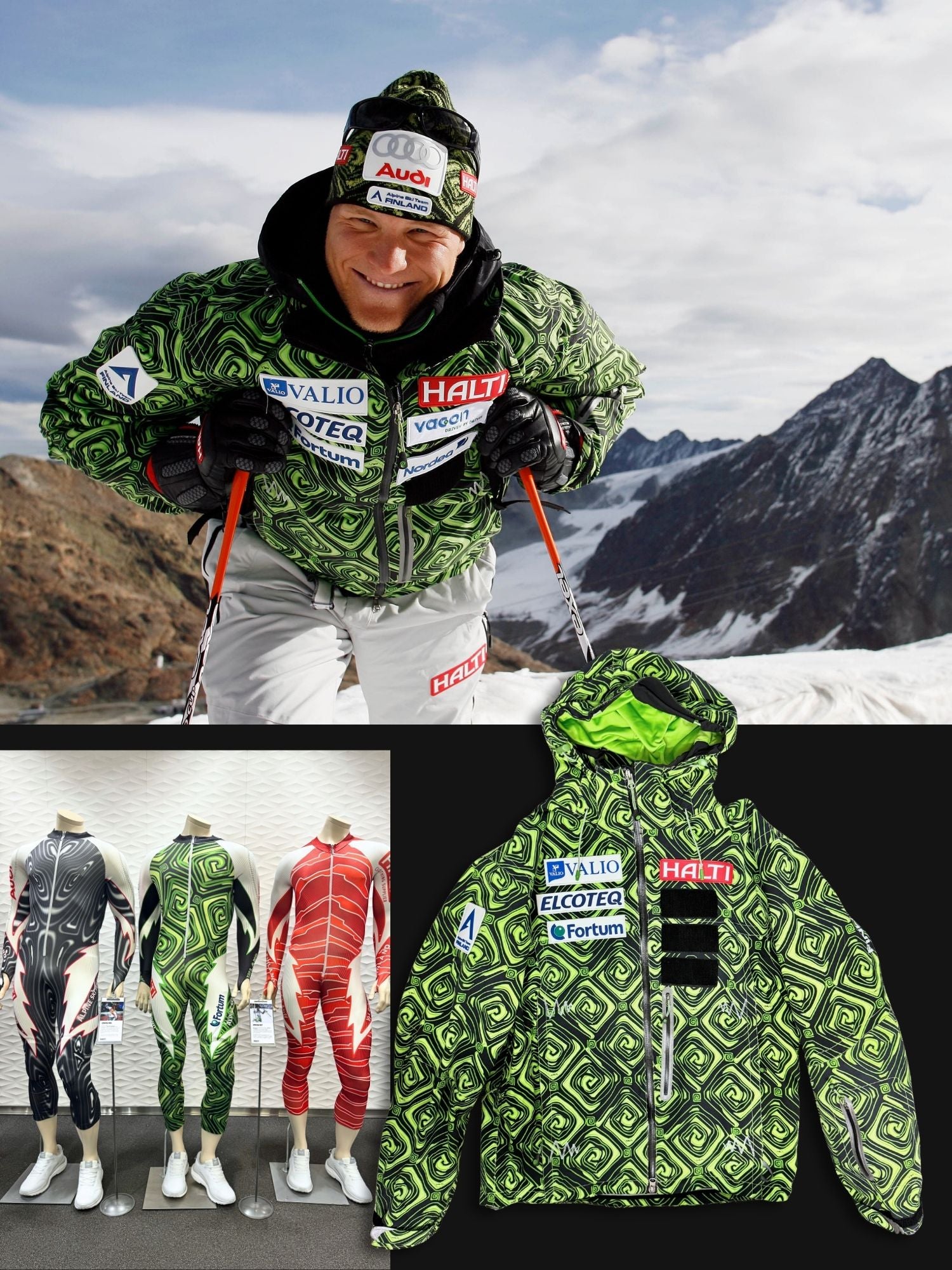
Staying at the Top Required Renewal
When Palander is asked to sum up the highs and lows of his career, the answer comes without hesitation. The brightest memories are the World Championships and the legendary slalom victory in Kitzbühel. The bitterest disappointments are tied to the Olympic Games, where his best results were ninth place in Nagano before his world championship title, and the same position later in Turin.
Palander’s successful national team career lasted 16 years, until 2011. During that time, alpine skiing underwent a major transformation as equipment evolved rapidly. In Vail, he still skied to a world championship title on 198 cm slalom skis, but already the following year, the shift to shorter skis became inevitable. Carving technique revolutionized skiing style, gate distances shortened, and long skis became history.
“I had learned the sport on the old skis and practically had to relearn it from scratch,” Palander notes.
The transition was not painless, but his ability to adapt kept him at the top for a long time.
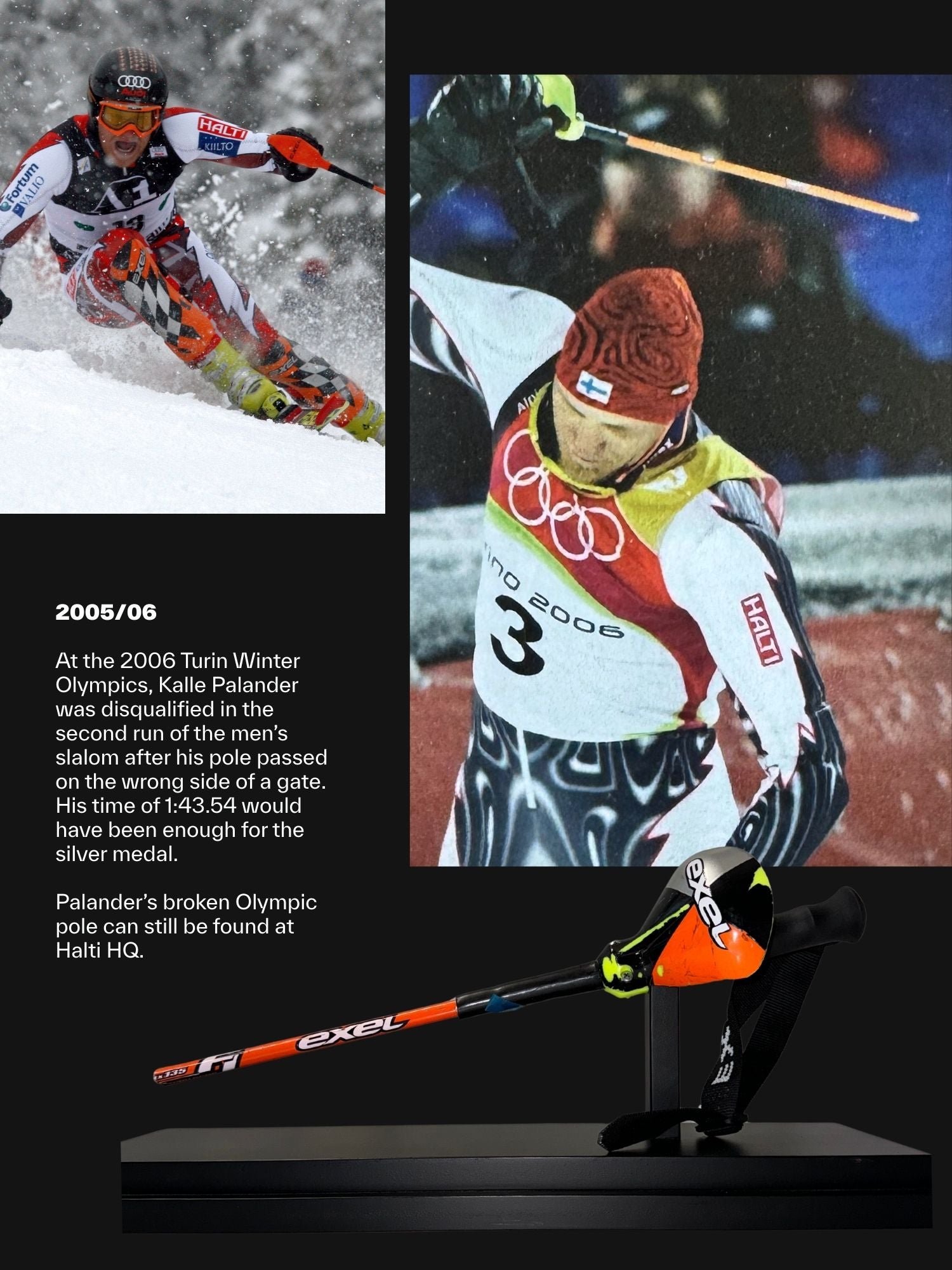
The Red Halti Beanie on the Podium
Toward the end of the 1990s, helmet use also began to increase, although many top skiers still competed without one. Palander was among those whose skiing felt better with a beanie on his head. Getting used to a helmet did not go smoothly. During ski testing in Levi in 2001, he told his coach Christian Leitner:
“I’m so slow that I don’t even need a helmet.”
Skiing with a helmet prevented him from “hearing the course properly” and affected his balance. The International Ski Federation first made helmets mandatory in speed disciplines, and from the mid 2000s also in technical events. Despite this, Palander never won a slalom race while wearing a helmet.
Halti’s red beanie, with the Audi logo on the front, became his trademark and one of the most popular products in Halti’s alpine collection. Fans were willing to do almost anything to get their hands on one.
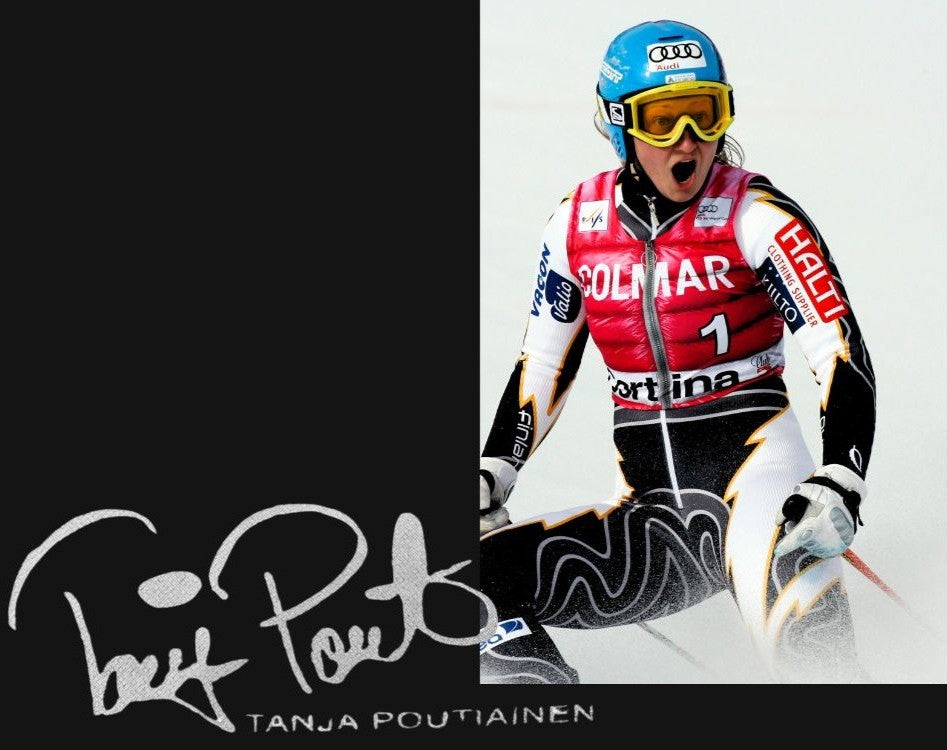
Finnish alpine skiing success did not rest solely on Palander’s shoulders.
Tanja Poutiainen-Rinne is one of Finland’s most successful alpine skiers and the most accomplished when measured by the number of championship medals. Her career includes an Olympic silver medal, four World Championship medals, 11 World Cup race victories, and several discipline Crystal Globes.
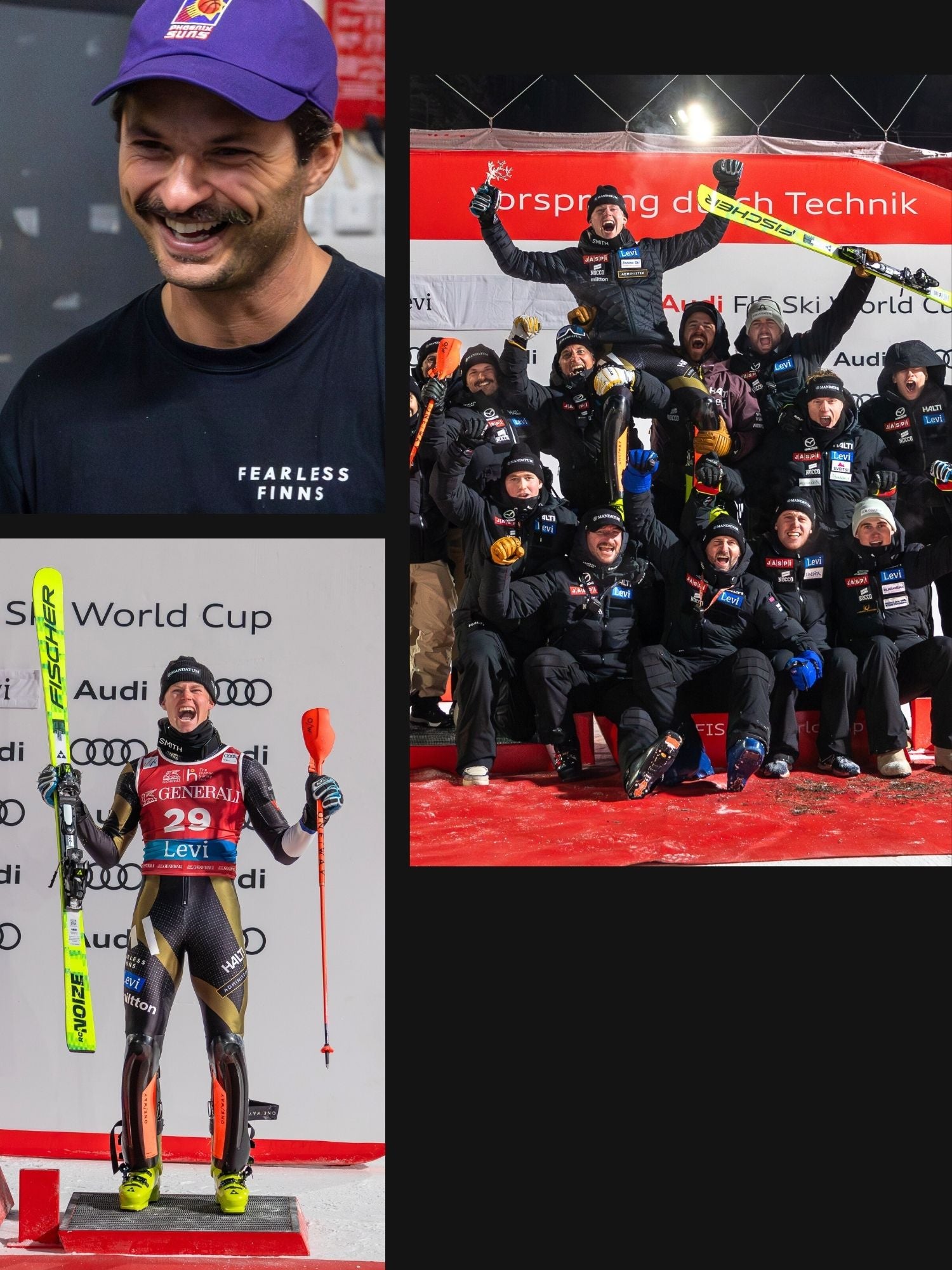
A New Generation, the Same Legacy
Marcus Sandell was still underage when he joined the junior national team.
“It was a huge deal as a junior to get to wear the same gear as Palander.”
For Sandell, Halti was not just an equipment supplier, but a partner that listened to athletes from the very beginning. Wishes and feedback were collected on everything from functionality to colors and overall design—and they were acted upon. The launch of new season colors and designs was always a big event and stirred strong emotions.
With a keen interest in fashion, Sandell also had a say in the visual look of the apparel.
“Our opinions genuinely mattered, and that felt good. Of course, some years the colors were a bit wild. The Hästens pattern, decorated with the colors of the Sámi flag in a black-and-white check, definitely made our French competitors giggle.”
In elite sports, equipment plays a role that goes beyond performance. It is an essential and highly visible part of a team’s identity and story. Marcus Sandell represented the national team from 2003 to 2018 and finished in the top ten of World Cup races several times during his career. His best individual World Cup result was fourth place in the giant slalom in Garmisch-Partenkirchen. In the 2012–2013 season, Sandell finished eighth overall in the giant slalom World Cup standings.
The Partnership Returns to Its Roots
Today, Sandell is responsible for the national team’s partnerships, and he played a key role in bringing about the current collaboration between the team and Halti.
The partnership feels like a homecoming. Halti is a brand that has helped shape Finnish alpine culture. The years when Halti first outfitted the team’s top performers still resonate today—even among skiers who were not yet born when the collaboration first began.
“I was genuinely excited when I heard the team was returning to Halti. This is exactly how it was meant to be,” Kalle Palander says with delight.
“I hope the young skiers understand how cool this really is.”
The same feeling was shared by the current generation. When Eddie Hallberg heard that the national alpine team was returning to Halti’s colors, his reaction was one of genuine excitement.
“For me, Halti has always been an essential part of Finnish alpine skiing,” Hallberg comments.
The legacy born at the turn of the millennium lives on today with a new generation of skiers, and the story of Finnish alpine skiing continues through outstanding products in Halti’s colors.